Model Making for Effective Density Planning in Dubai
Large development sites in Dubai often cover vast areas that combine residential, commercial, hospitality, and public functions. Density planning in such contexts is not only about how much can be built, but also about how people will live, move, and interact within the space.
Physical representations help planners and authorities understand these relationships clearly. In this process, model making becomes an essential support tool, translating abstract density calculations into visible and tangible form.
Visualizing Built Form Distribution Across the Site
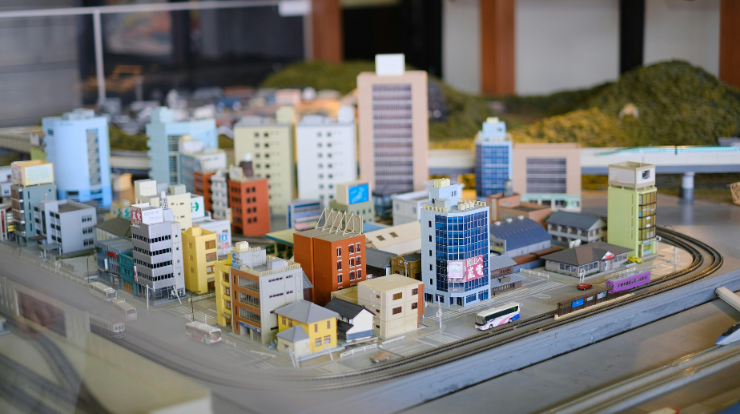
Density planning involves distributing built mass across a site in a balanced way. Physical models allow planners to see where height is concentrated and where it is reduced. This visual clarity helps decision-makers assess whether density feels appropriate for different zones. High-rise clusters, mid-rise transitions, and low-density edges can be understood instantly. This is especially important in Dubai, where developments often sit next to existing communities, highways, or waterfronts.
Assessing Human Scale Within High-Density Areas
Numerical density values do not always reflect how spaces feel at ground level. Physical models help planners evaluate human scale within dense developments.
By examining street widths, podium heights, and building spacing, authorities can judge whether areas will feel comfortable or overwhelming. This is critical in Dubai’s climate, where shading, airflow, and walkability are key concerns. Physical visualization allows these factors to be discussed early in the planning process.
Supporting Balanced Land Use Allocation
Large Dubai sites usually include multiple land uses that must coexist efficiently. Residential, office, retail, and leisure components each demand different density levels. Physical models make it easier to see how these uses are distributed across the site. Planners can evaluate whether employment density supports transport infrastructure or whether residential density aligns with available amenities. These insights help refine land use strategies before approvals are finalized.
Evaluating Height Gradation and Transitions
One of the main challenges in density planning is managing height transitions. Sudden changes in building height can disrupt urban character and impact views. Physical models allow planners to assess how heights step up or down across a development.
This is particularly important near sensitive edges such as existing neighborhoods or coastal areas. Through model making dubai, planners can visually test different height scenarios and select solutions that feel coherent and respectful of context.
Clarifying Infrastructure Capacity and Access
Density directly affects infrastructure demands. Roads, public transport, parking, and utilities must all support the planned population and activity levels. Physical models help visualize how dense areas connect to main access points and service corridors.
Reviewers can see whether circulation networks are logical and whether high-density zones are adequately supported. This clarity reduces the risk of underestimating infrastructure requirements during approval stages.
Improving Communication With Planning Authorities
Density discussions often involve complex data, ratios, and planning terminology. Physical models simplify these conversations. Authorities can point to specific areas and discuss concerns without relying solely on technical drawings. This shared reference improves understanding and speeds up decision-making. In Dubai’s multi-agency approval environment, clear communication is essential for aligning expectations across departments.
Testing Phased Density Growth Over Time
Many large sites in Dubai are developed in phases over long periods. Density is not delivered all at once. Physical models help illustrate how density will increase over time. Removable or layered components can show future buildings without confusing current approvals. This helps authorities understand long-term impacts while approving early phases. It also reassures them that infrastructure and public spaces are planned to support future density.
Understanding Open Space and Density Balance
High-density developments require carefully planned open spaces to maintain livability. Physical models allow planners to see the relationship between built mass and open areas. Parks, plazas, and buffers can be evaluated in proportion to surrounding density. This balance is critical in Dubai, where public realm quality plays a growing role in planning approvals. Through model making, planners can ensure that density does not compromise environmental or social quality.
Aligning Density With Market and Investment Strategy
Density planning in Dubai is closely tied to economic viability. Physical models help developers and authorities assess whether density levels align with market expectations and investment goals. Overbuilt areas can be identified early, as can underutilized zones. This visual assessment supports more realistic and sustainable development strategies, reducing the risk of future adjustments.
Reducing Approval Risks and Revisions
Misjudging density can lead to approval delays or redesign requests. Physical models help identify potential issues before submissions are finalized. Concerns about overcrowding, visual impact, or infrastructure strain can be addressed proactively. This reduces the likelihood of costly revisions later in the process and supports smoother approvals.
Conclusion
Density planning in large Dubai sites requires more than calculations and diagrams. It demands a clear understanding of spatial relationships, human experience, and long-term growth. Physical visualization provides this clarity by making density visible and understandable. By supporting discussions on scale, land use, infrastructure, and phasing, model making remains a powerful tool in shaping balanced and approved master plans for Dubai’s large-scale developments.